

What are Passkeys?
Passkeys are a modern, passwordless authentication mechanism based on FIDO2 and WebAuthn standards. They allow users to securely sign in using cryptographic keys instead of traditional passwords. Unlike passwords, which are static and shareable secrets, passkeys utilize asymmetric encryption—a public-private key pair. The private key is securely stored on the user’s device and never leaves it.
What sets passkeys apart from standard WebAuthn credentials is their ability to be synchronized across devices via secure platform services like Apple iCloud Keychain, Google Password Manager, or Microsoft Authenticator. This makes them portable and user-friendly within the same ecosystem.
With passkeys, users can authenticate using biometric gestures (fingerprint, Face ID), PINs, or device unlock patterns—eliminating the need to type a password or remember anything.
Why Passkeys Matter
Passkeys address several long-standing challenges in digital identity and user experience:
Eliminate passwords entirely: This reduces the risks of phishing, credential reuse, and brute-force attacks.
Enhance user convenience: Users enjoy quick, frictionless login experiences with built-in biometrics or device unlock.
Support phishing-resistant MFA: Passkeys are tied to the domain and device, making them immune to credential interception.
Increase adoption of passwordless journeys: This is especially crucial for B2C CIAM platforms in banking, gaming, and fintech sectors.
Meet modern compliance and assurance requirements: Passkeys align with FIDO2 and NIST 800-63B AAL2/AAL3 standards.
How Passkeys Work
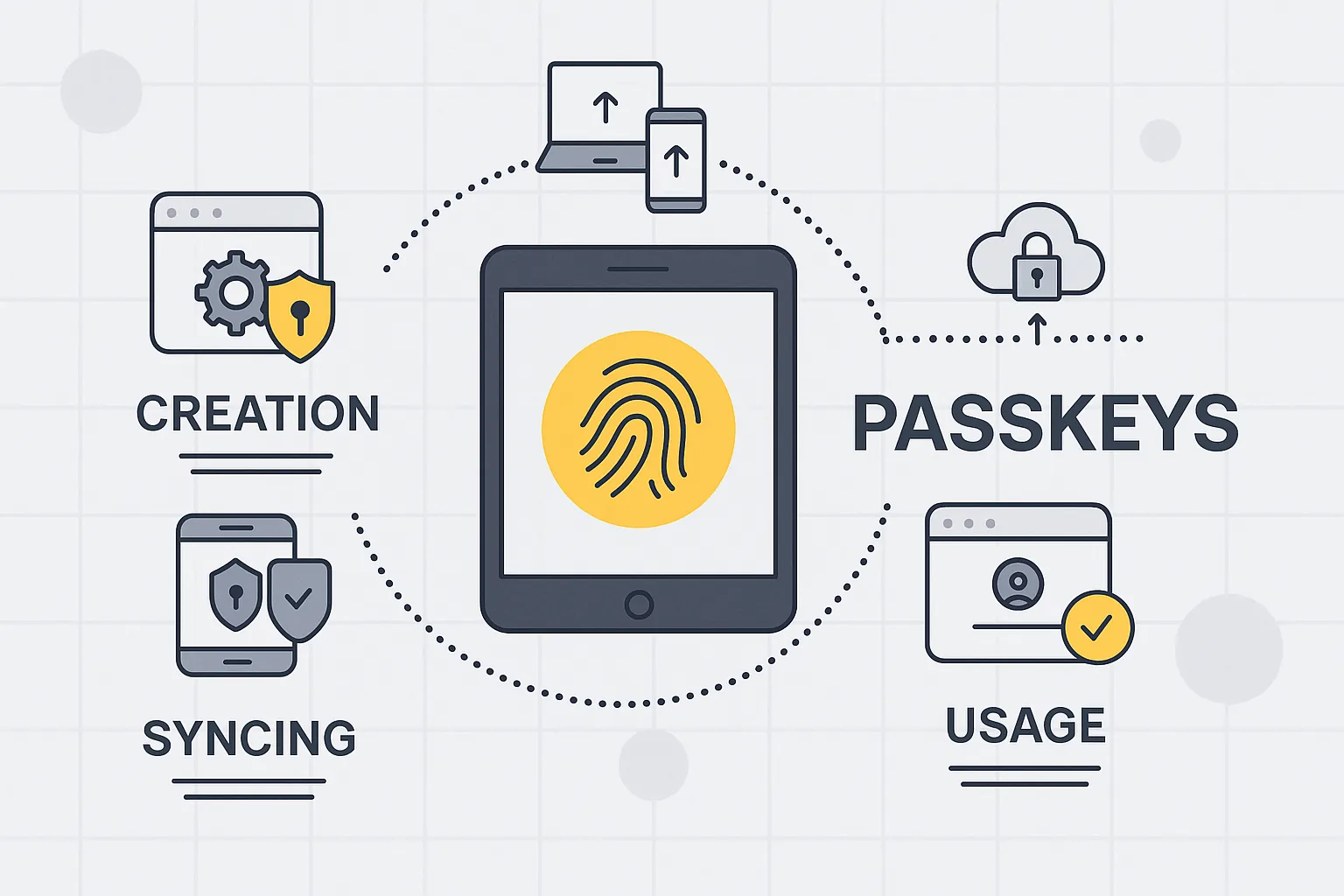
The passkey lifecycle consists of three key phases: creation, syncing, and usage.
1. Creation
A user creates a passkey during sign-up or a passwordless upgrade on a supported platform.
The operating system or browser generates a public-private key pair.
The public key is sent to the service provider (e.g., a bank’s CIAM system), while the private key remains on the device, protected by biometrics or a PIN.
2. Syncing (Within Ecosystems)
On platforms like iOS/macOS or Android, passkeys can be synced across a user’s devices using end-to-end encrypted cloud storage.
This allows a passkey created on one device (e.g., phone) to be used on another (e.g., laptop), ensuring seamless access without re-registration.
Cross-platform support is enabled via QR codes or Bluetooth proximity, making it possible to log in from a Windows PC using an iPhone.
3. Usage (Authentication)
The user visits the service login page.
The browser prompts for biometric or local device authentication.
The device signs a server challenge with the private key, and the server verifies it using the stored public key.
The result is a strong, phishing-resistant, and seamless authentication experience.
Key Properties of Passkeys
Device-bound but syncable within ecosystems.
Not reusable across different websites—domain binding is enforced.
Phishing-proof: Passkeys cannot be tricked into signing into lookalike domains.
Biometric-enabled: This adds user verification without storing biometric data on the server.
Adoption Landscape
Supported Platforms
Major platforms include Apple, Google, and Microsoft (via OS and browser APIs).
IAM Platform Support
Leading IAM platforms such as Ping Identity, Okta, ForgeRock, and Keycloak support FIDO2/WebAuthn extensions.
Use Cases
Passkeys are ideal for consumer onboarding, step-up authentication, passwordless login for banking apps, fintech portals, and high-value transactions.
Conclusion
As we move towards a more digital future, adopting passkeys can significantly enhance security and user experience. By eliminating traditional passwords, we can reduce risks associated with phishing and credential theft. The convenience of biometric authentication and seamless syncing across devices makes passkeys a compelling choice for modern businesses.
In a world where digital identity security is paramount, embracing passkeys is a step towards ensuring trust and compliance in our online interactions.
For more insights on digital identity solutions, visit Midships.