

From Static Control to Purpose-Driven Trust in the AI-Native Enterprise
Executive Summary
The enterprise identity model — long the foundation of digital trust — is reaching its natural limits. For decades, identity systems have functioned reliably by answering two fixed questions: Who is requesting access, and What are they allowed to access? Yet as artificial intelligence begins to act not only as a tool but as an autonomous participant in enterprise workflows, this static model breaks down.
At Midships, our work with global financial and technology institutions shows a growing tension between AI-driven autonomy and traditional identity controls. The next era of cybersecurity and governance will depend on re-architecting access models around purpose, intent, and action — enabling AI systems to operate intelligently without sacrificing human accountability or trust.
This paper proposes a pragmatic framework and architecture for achieving this balance, allowing organizations to transition from rule-based access to intent-aware identity orchestration — the foundation of intelligent trust in enterprises.
1. The Current Identity Landscape: Strengths and Saturation
For decades, identity and access management (IAM) has provided the logical perimeter of enterprise security. The identity layer authenticates who the actor is; authorization determines what that actor can do; and applications enforce access based on predefined roles and entitlements.
This model thrives in environments with predictable actors and bounded systems. It assumes context stability, static policies, and finite intent — ideal for humans and deterministic services. But as enterprises deploy AI agents capable of self-learning, cross-domain reasoning, and autonomous action, these assumptions no longer hold.
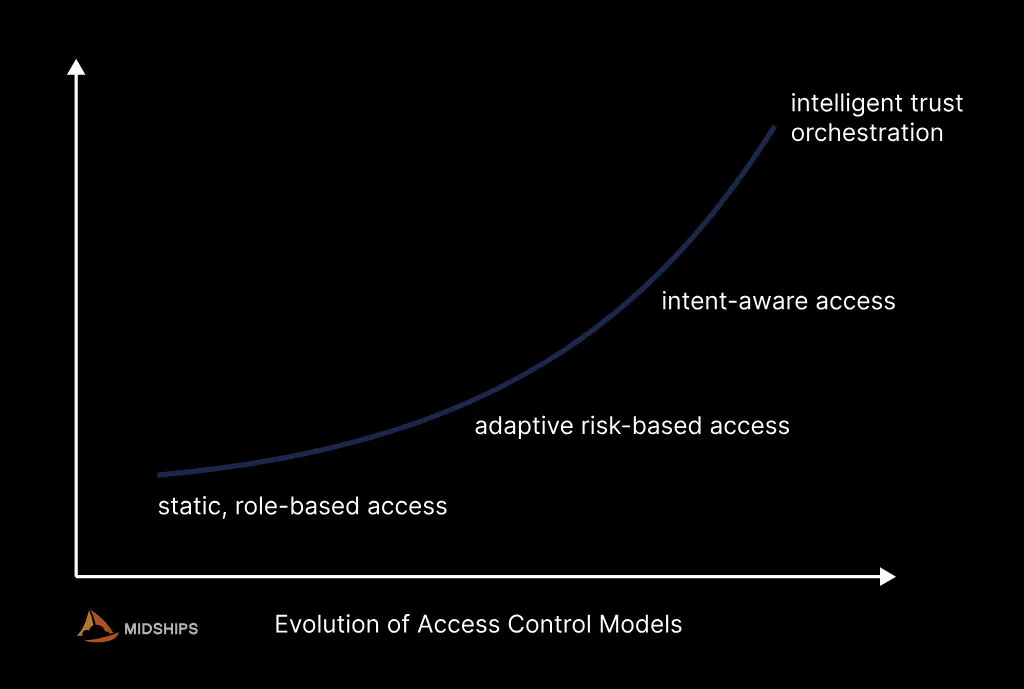
The challenge is no longer verifying identity, but verifying alignment — ensuring that what an intelligent system does remains consistent with what it was designed to achieve.
2. How AI Is Changing the Enterprise Landscape
Enterprise AI adoption follows a clear spectrum of maturity:
AI for Automation – Streamlining repetitive processes, executing deterministic logic, and scaling operational efficiency.
AI as an Assistant – Enhancing productivity by providing contextual insights and knowledge retrieval through conversational interfaces.
AI as a Problem Solver – Operating autonomously across domains, synthesizing data, and executing unprogrammed yet logically consistent actions.
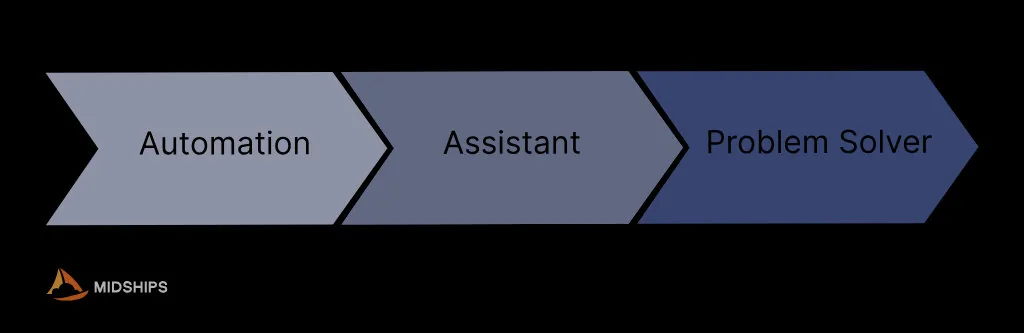
In the first two stages, traditional IAM holds firm: access policies can be predefined, and human accountability remains direct. But in the third — the problem solver stage — AI must traverse systems, interpret intent, and act dynamically. Static access boundaries cannot anticipate every scenario. Continuous human authorization, while theoretically safe, becomes both impractical and counterproductive.
The question shifts from “Who is allowed?” to “Is this AI action consistent with its defined purpose and current intent?”
3. The Breaking Point: Why Traditional Access Models Fail
As organizations grant AI broader operational authority, two critical failure modes emerge:
Human Supervisory Breakdown – Oversight becomes symbolic. Humans cannot meaningfully approve or reject every AI action, leading to rubber-stamping or fatigue.
Degraded User Experience – Frequent approval loops disrupt process automation, reducing trust and adoption of AI systems.
The result is a governance paradox: too little control breeds risk; too much control kills innovation. What is needed is a dynamic trust model that can evaluate context continuously without relying on constant human mediation.
4. The New Lens: Purpose, Intent, and Action
Midships proposes reframing access control around three interlinked concepts — Purpose, Intent, and Action — forming a chain of contextual accountability.
Purpose defines why an AI exists — its operational mission.
Static purpose: established at deployment, representing the system’s design boundary.
Dynamic purpose: refined at runtime by human instruction, defining the task-specific boundary.
Intent expresses the AI’s reasoning — the justification behind a specific operation.
Action is the execution itself — the concrete step the AI takes within enterprise systems.
By validating that:
Action aligns with Intent, and
Intent aligns with Purpose,
organizations can enforce continuous alignment between what the AI does and what it was trusted to do.
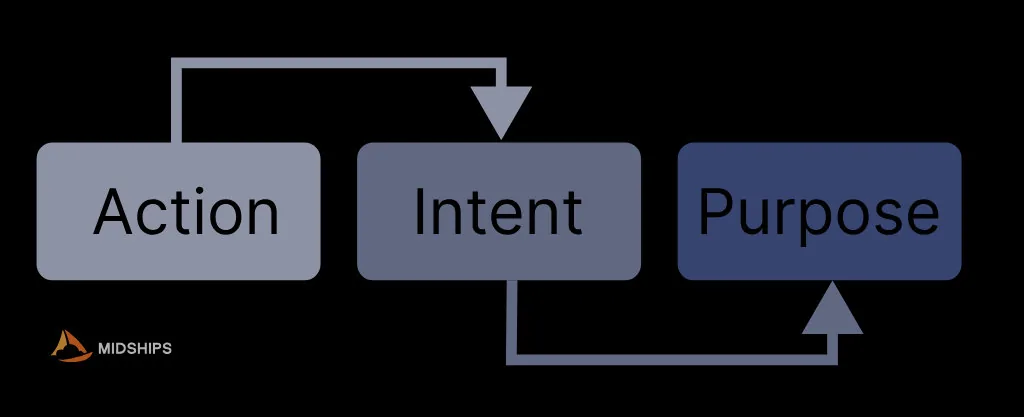
This model embeds explainability and auditability into every AI operation, enabling adaptive control without constant interruption.
5. A Hybrid Access Control Framework for AI Systems
Building on this model, we can classify AI access scenarios into three governance tiers:
Case 1 – Non-Sensitive Access
AI interacts with low-risk APIs or datasets using traditional IAM.
Static policies, defined scopes, and existing IAM controls suffice.
Goal: operational simplicity, zero friction.
Case 2 – Sensitive Access with Human Responsibility
Where actions require explicit human accountability — financial transactions, configuration changes, or external data sharing — human approval remains mandatory.
Goal: preserve compliance and legal defensibility.
Case 3 – Sensitive Access without Human Responsibility
For high-velocity AI decisions in secure environments, a Governance AI layer performs dynamic evaluation:
Verifies action–intent–purpose alignment in real time,
Grants or denies access accordingly, and
Logs reasoning for later audit.
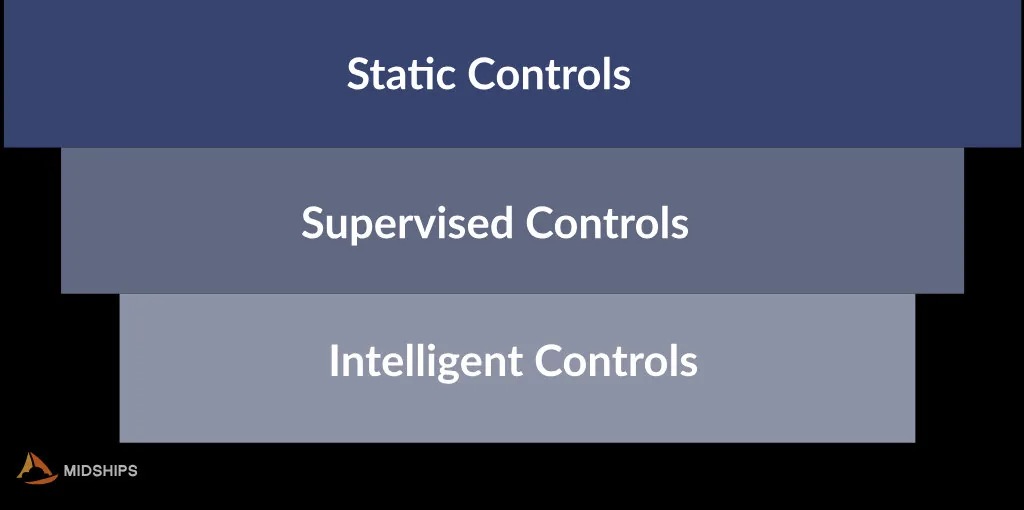
This tiered approach balances innovation with assurance — simple where possible, supervised where required, and intelligent where necessary.
6. Architecting Intelligent Evaluation: Three Deployment Models
Implementing intent-aware access requires architectural flexibility. Enterprises differ in maturity, technology stack, and regulatory constraints. Three models emerge:
Option 1 – Centralized Governance
A unified access control hub integrates with all AI systems.
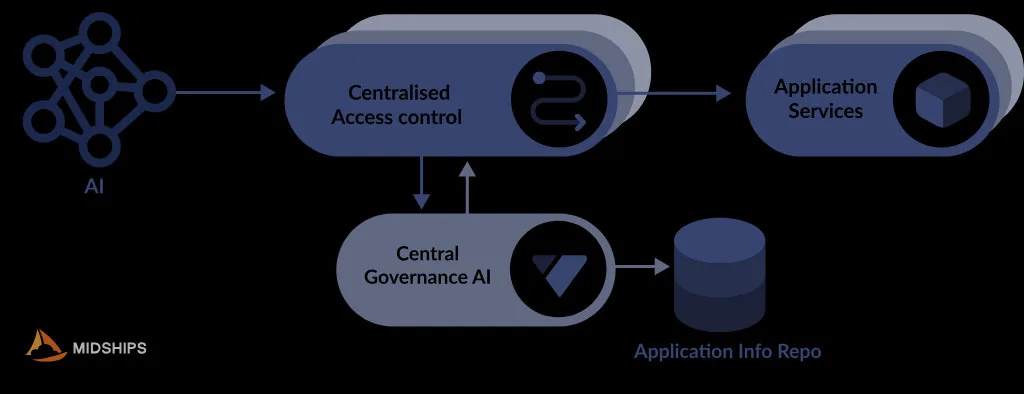
A central Governance AI engine evaluates action–intent–purpose alignment using an application information repository that stores metadata for all protected resources.
Advantages
Consistent policy enforcement across the enterprise.
Easier audit and compliance reporting.
Trade-offs
Single point of dependency.
Harder to maintain contextual precision for diverse applications.
Option 2 – Decentralized Governance
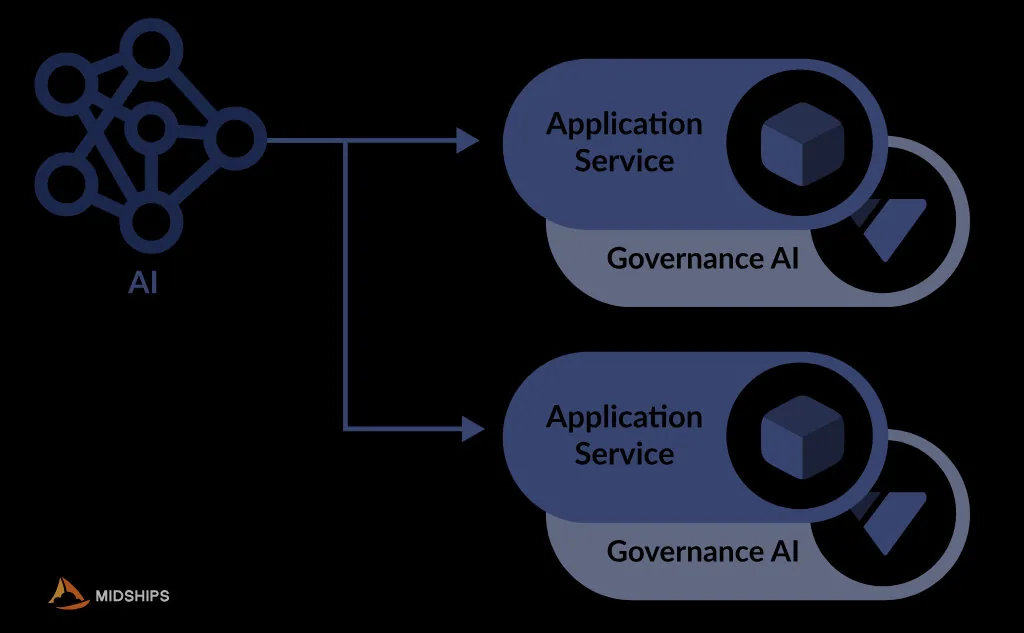
Each application hosts its own Governance AI, performing local evaluation.
Advantages
Context-rich evaluation based on domain semantics.
No central bottleneck.
Trade-offs
Fragmented governance standards.
High implementation complexity for legacy systems.
Option 3 – Hybrid Governance
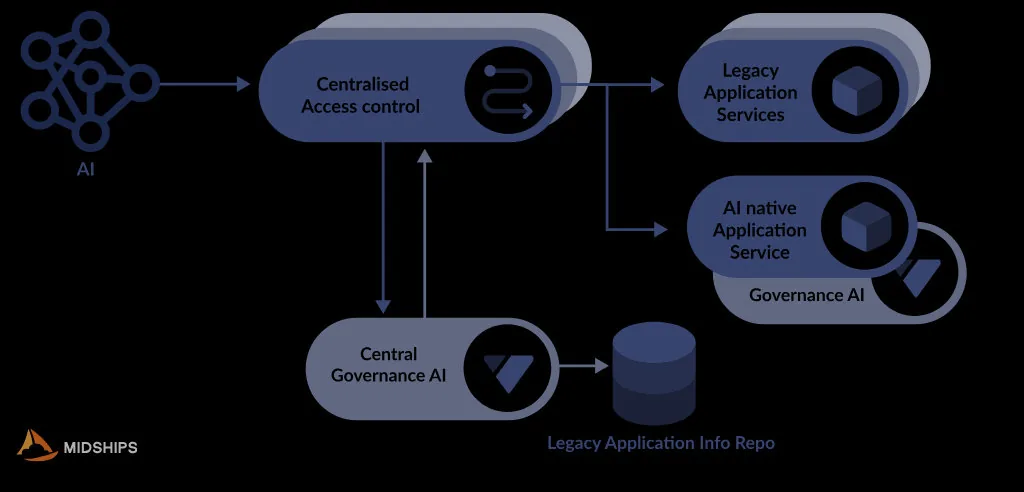
A pragmatic balance: a central enforcement plane coordinates with local evaluators.
This architecture supports gradual adoption — allowing non-AI-native applications to rely on centralized evaluation while enabling modern systems to host local intelligence.
7. Strategic Implications: From Compliance to Competitive Advantage
Implementing intent-aware access is more than a security upgrade; it’s a strategic enabler for AI-native transformation. It allows CIOs and CTOs to:
Accelerate AI adoption without compromising governance.
Demonstrate explainable compliance in audits and regulatory reporting.
Enable safe autonomy, turning AI from a supervised assistant into a trusted operator.
It also positions the identity layer as a strategic differentiator — not merely a gatekeeper, but a dynamic intelligence fabric that fuses zero trust, adaptive access, and AI orchestration into a unified capability.
Callout Insight
Enterprises that master “intent-aware trust” will not just secure AI — they will operationalize it responsibly, at scale.
8. Conclusion: Toward Intelligent Trust
Identity systems are evolving from being controllers of access to orchestrators of trust. In the AI-native enterprise, security and intelligence must converge: every access decision becomes a reasoning event, every action a proof of alignment.
The shift from static roles to purpose-driven authorization represents the next frontier of enterprise security design. By embedding purpose, intent, and action into the identity fabric, organizations can achieve a state of intelligent trust — where AI autonomy, governance, and human accountability coexist in balance.
Writer’s Overview
Yuxiang Lin – Associate Director - R&D, Midships
Yuxiang leads solution architecture initiatives across Midships, driving innovation in identity and access management platforms. He focuses on bridging business objectives and technology constraints through forward-looking solution design and enterprise architecture excellence.
Short bio: Yuxiang is a solution leader specializing in IAM, authentication and authorization design, and enterprise architecture. He delivers scalable identity solutions that align business and technology goals across Asia, including Singapore, the Philippines, Indonesia, and Vietnam.
🔗 LinkedIn: Yuxiang Lin
Copyright @ 2025 Midships Global PTE LTD. All rights reserved.